


What is Calcific Tendinitis?
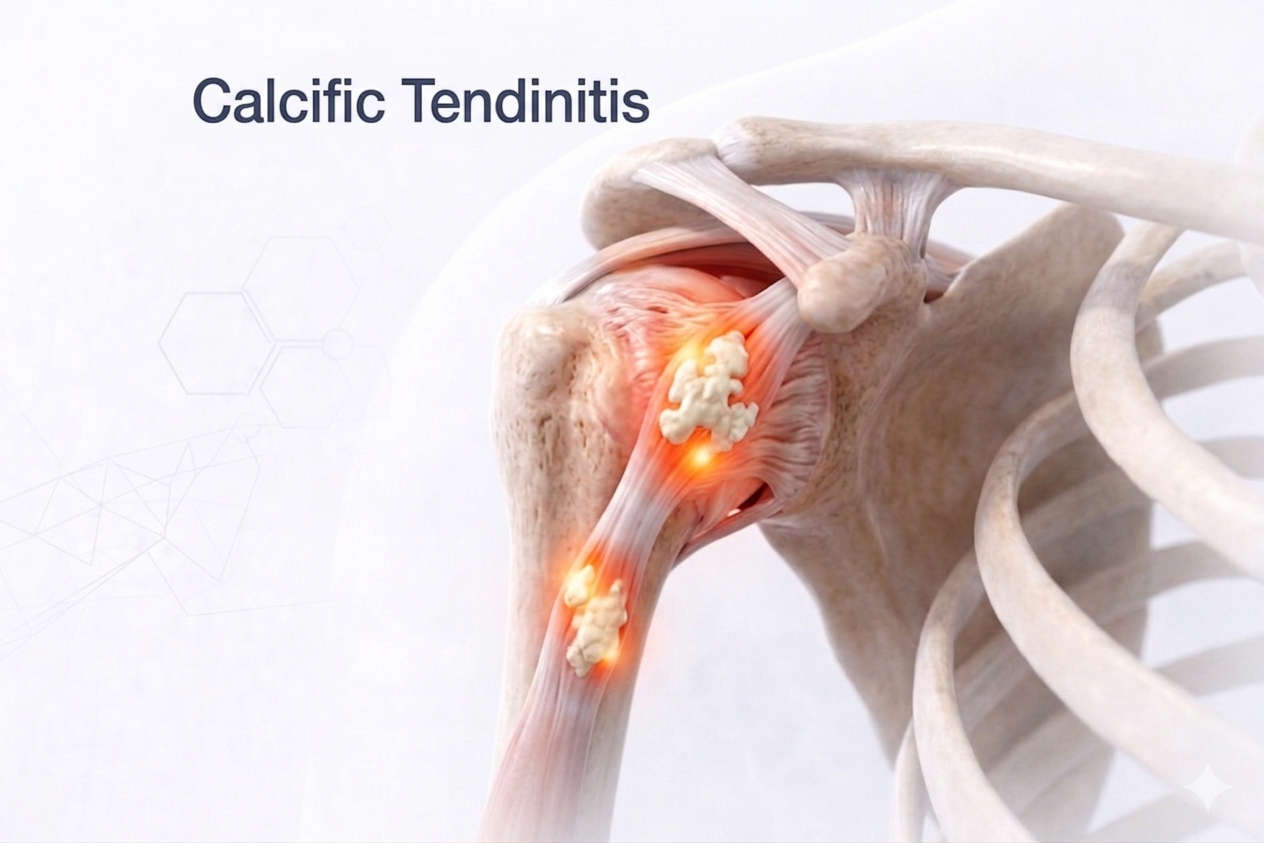
Calcific Tendinitis is a painful shoulder condition in which calcium crystals deposit within the rotator cuff tendons, most commonly the supraspinatus tendon.These calcium deposits irritate the surrounding soft tissues, causing inflammation, swelling, and intense pain — especially during arm elevation or at night.
Patients often describe sudden, severe shoulder pain that can radiate down the arm and limit even simple movements like wearing clothes or combing hair.
⚙️ How Does it Develop?
The exact cause isn’t always clear, but it is believed to occur due to poor blood supply to certain parts of the tendon and repetitive microtrauma.As the tendon undergoes stress and minor degeneration, calcium crystals start to accumulate within it.Over time, the body recognizes these deposits as foreign and mounts an inflammatory response, leading to severe pain.
🧩 Phases of Calcific Tendinitis
- Formative Phase:
- Calcium deposits begin forming within the tendon.
- Usually painless or mild discomfort.
- Resting Phase:
- Deposits remain stable but can mechanically irritate surrounding structures.
- Pain occurs with overhead activity.
- Resorptive Phase:
- The body starts absorbing the calcium; inflammation peaks.
- This is the most painful phase, often leading patients to seek medical attention.
- Post-Calcific Phase:
- Healing and tendon remodeling occur.
- Pain subsides and motion gradually improves.
⚠️ Risk Factors
- Age between 30–60 years
- Female predominance
- Repetitive overhead work or sports
- Diabetes or thyroid disorders
- Poor posture or scapular dyskinesia
- History of shoulder impingement or rotator cuff pathology
🔬 Etiology & Pathophysiology
The condition results from metaplastic transformation of tendon cells into calcium-forming cells.The deposits are typically composed of hydroxyapatite crystals.When the body initiates resorption, inflammation of the bursa and surrounding tissues occurs — this causes the sharp, sudden pain typical of calcific tendinitis.It commonly affects the supraspinatus but can involve the infraspinatus, subscapularis, or teres minor tendons.
🧪 Investigations
- Clinical Examination:
- Painful and restricted shoulder movements.
- Tenderness over the greater tuberosity region.
- Pain accentuated during overhead activity.
- Imaging:
- X-ray:Shows characteristic white, cloud-like calcium deposits in the rotator cuff region.
- Ultrasound:Localizes the deposit, assesses size, and guides treatment such as aspiration or injection.
- MRI:Used when associated rotator cuff tear or impingement is suspected.
💊 Management
🩹 Non-Surgical Treatment (First Line)
- Rest & Activity Modification:Avoid repetitive overhead motion.
- Cold Compress & Anti-Inflammatory Medications:For pain relief.
- Physiotherapy:
- Range-of-motion and strengthening once pain decreases.
- Postural and scapular stabilizing exercises to reduce recurrence.
- Ultrasound-Guided Interventions:
- Needle Aspiration / Barbotage:The deposit is fragmented and washed out using saline under ultrasound guidance.
- PRP or Corticosteroid Injection:Reduces inflammation and promotes healing.
- Extracorporeal Shock Wave Therapy (ESWT):Helps break calcium deposits non-invasively.
🩺 Surgical Management (If Symptoms Persist >6 Months)
- Arthroscopic Removal of Calcium Deposits:
- Keyhole procedure to precisely remove deposits and decompress the subacromial space.
- Often combined with bursectomyor acromioplasty if impingement coexists.
- Rehabilitation:
- Passive shoulder motion begins immediately.
- Strengthening and functional recovery in 6–8 weeks.
⏳ Sequelae if Left Untreated
- Chronic shoulder pain and stiffness
- Secondary subacromial impingement
- Rotator cuff degeneration or tear
- Recurrent episodes of acute inflammation
- Sleep disturbance and functional disability
🌟 Prognosis
Most patients achieve complete pain relief and full range of motion with timely conservative or arthroscopic management.Re-formation of calcium is rare when biomechanics and posture are corrected.
💬 Key Takeaway
“Calcific Tendinitis isn’t just about calcium — it’s about catching inflammation before it catches you.With precise ultrasound diagnosis and targeted treatment, pain can disappear almost overnight.”