



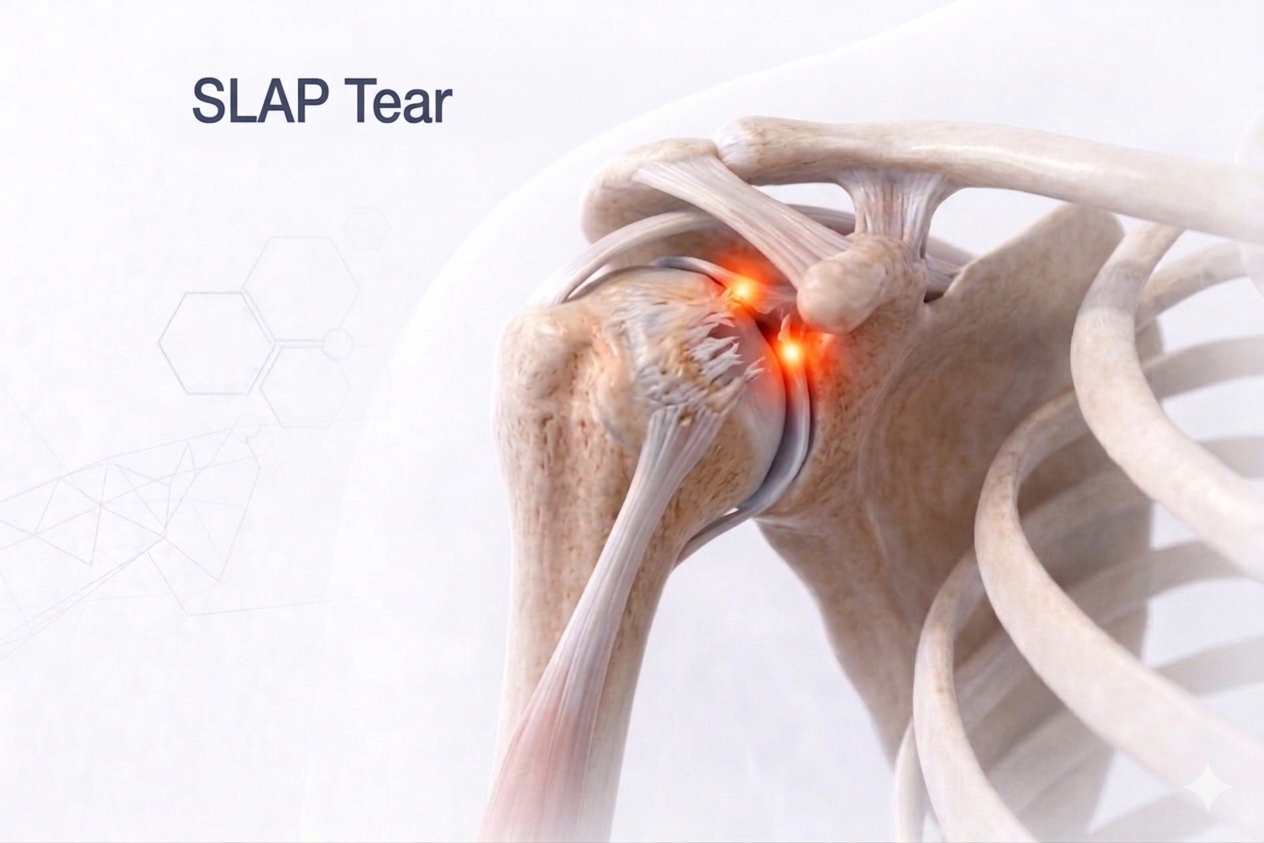
🔍 What is a SLAP Tear?
A SLAP tear is an injury to the superior part of the glenoid labrum, where the biceps tendon attaches to the shoulder socket.
“SLAP” stands for Superior Labrum Anterior to Posterior, meaning the tear occurs from the front to the back of the labrum.
It commonly causes deep shoulder pain, clicking, and instability, especially during overhead or throwing activities.
⚙️ How Does it Develop?
The labrum acts as a stabilizing rim for the shoulder joint.
SLAP tears occur due to:
- Repetitive overhead stress
- Sudden traction or pulling force on the arm
- Fall on an outstretched hand
These forces lead to detachment or fraying of the labrum, often involving the biceps anchor.
⚠️ Common Causes
- Repetitive throwing (cricket, baseball, javelin)
- Heavy overhead lifting (gym injuries)
- Sudden pulling injury (lifting heavy object)
- Trauma (fall on outstretched hand)
- Shoulder dislocation or instability
- Age-related degeneration
👥 Who is at Risk?
- Throwing athletes (cricketers, baseball players)
- Swimmers and racquet sport players
- Gym-goers (especially overhead lifts)
- Manual laborers
- Individuals with prior shoulder instability
🧠 Pathophysiology
- Repetitive traction or torsional stress on the biceps-labral complex
- Leads to peeling back of the superior labrum
- Causes instability at the biceps anchor
- May coexist with:
- Rotator cuff pathology
- Internal impingement
- Glenohumeral instability
🔴 Symptoms
- Deep, poorly localized shoulder pain
- Pain during overhead activity or throwing
- Clicking, popping, or catching sensation
- Weakness or reduced performance (especially in athletes)
- Feeling of shoulder instability
- Pain during follow-through phase of throwing
🧪 Clinical Tests
- O’Brien’s Test (Active Compression Test)
- Speed’s Test (biceps involvement)
- Crank Test (labral pathology)
- Biceps Load Test
(No single test is definitive — combination improves accuracy)
🔬 Investigations
- X-ray → Usually normal (rules out bony injury)
- MRI → Suggestive but may miss subtle tears
- MR Arthrography → Gold standard for diagnosing SLAP tears
🧩 Types of SLAP Tears (Simplified)
- Type I → Fraying of labrum (degenerative)
- Type II → Detachment of labrum + biceps anchor (most common)
- Type III → Bucket-handle tear of labrum
- Type IV → Tear extending into biceps tendon
💊 Management
🩹 Non-Surgical Treatment
- Activity modification (avoid overhead strain)
- Physiotherapy:
- Scapular stabilization
- Rotator cuff strengthening
- Posterior capsule stretching
- Anti-inflammatory medications
- Gradual return-to-sport program
(Effective in many non-athletes and mild cases)
🩺 Surgical Treatment
(For persistent pain or athletes)
- Arthroscopic SLAP Repair:
- Reattachment of labrum using anchors
- Biceps Tenodesis:
- Detaching and reattaching biceps tendon (common in older patients)
- Debridement (for minor tears)
⏳ If Left Untreated
- Chronic shoulder pain
- Persistent clicking and instability
- Reduced sports performance
- Progression to rotator cuff problems
- Long-term shoulder dysfunction
🌟 Prognosis
- Good outcomes with structured rehabilitation
- Athletes may require longer recovery
- Surgical repair shows high success in selected patients
- Early diagnosis improves return-to-sport rates
💬 Key Takeaway
“Deep shoulder pain with clicking is not just strain —
it could be a SLAP tear affecting your shoulder stability and performance.”