



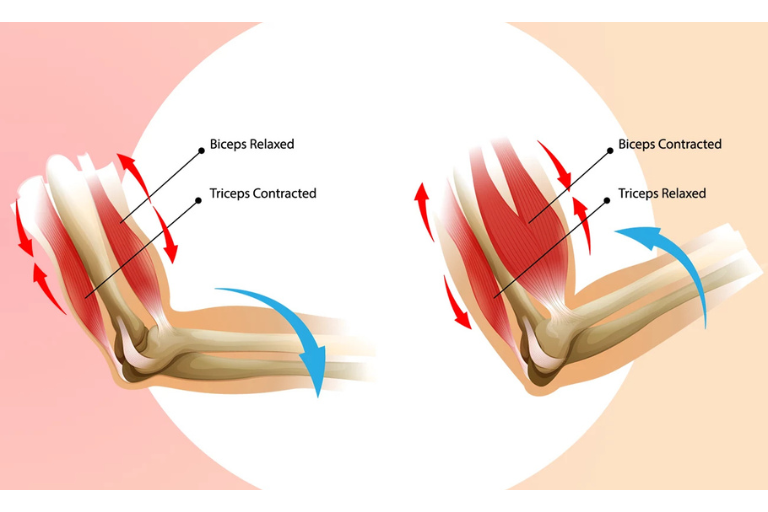
What is Biceps Tendinitis?
Biceps Tendinitis refers to inflammation or irritation of the long head of the biceps tendon, which runs from the biceps muscle through a narrow groove in the upper arm bone (bicipital groove) and attaches to the top of the shoulder socket (glenoid).
This tendon helps with shoulder flexion, stability, and forearm rotation.
When inflamed, it causes pain in the front of the shoulder, especially while lifting, reaching overhead, or rotating the arm. Patients often describe a dull ache that worsens with activity or at night.
⚙️ How Does it Develop?
Biceps tendinitis usually results from repetitive overhead activity or age-related wear of the tendon.
The tendon passes through a tight space where constant friction, overuse, or micro-trauma can trigger inflammation.
In athletes and fitness enthusiasts, poor shoulder mechanics or imbalance between the rotator cuff and biceps muscles adds stress to the tendon, leading to degeneration.
⚠️ Risk Factors
- Repetitive overhead sports (cricket, tennis, swimming, weight training)
- Rotator cuff tears or shoulder impingement (often coexist)
- Poor posture or scapular instability
- Degenerative changes in people >40 years
- Overuse in gym-goers performing pull-ups, bench press, or curls
- Shoulder instability or SLAP lesions
- Diabetes or inflammatory conditions
🔬 Etiology & Pathophysiology
The long head of the biceps tendon passes through the shoulder joint before entering its bony groove.
- Primary tendinitis: Due to overuse or impingement.
- Secondary tendinitis: Occurs alongside other shoulder pathologies like rotator cuff disease, labral tears, or instability.
Microscopically, chronic inflammation leads to tendon fiber degeneration, thickening, and loss of elasticity.
If untreated, this can progress to tendon fraying, subluxation (slipping from the groove), or even rupture.
🧪 Investigations
- Clinical Examination:
- Pain localized to the bicipital groove on palpation.
- Positive Speed’s test and Yergason’s test.
- Associated impingement or instability signs may coexist.
- Imaging:
- Ultrasound: Dynamic assessment showing inflammation or fluid around the tendon.
- MRI Shoulder: Gold standard to assess tendon quality, associated cuff or labral tears, and presence of partial rupture.
💊 Management
🩹 Non-Surgical (Mainstay of Treatment)
- Rest & Activity Modification: Avoid repetitive overhead or weight-bearing activities.
- Medications: Anti-inflammatory drugs to reduce pain and swelling.
- Physiotherapy:
- Gentle stretching, rotator cuff strengthening, and posture correction.
- Scapular stabilization exercises to reduce tendon stress.
- Ultrasound-Guided Injections:
- Corticosteroid or PRP injections into the bicipital groove for persistent inflammation.
- Cold therapy and gradual strengthening during recovery phase.
🩺 Surgical (If Persistent or Recurrent)
- Arthroscopic Tenotomy: The diseased tendon is released to relieve pain (for low-demand or elderly patients).
- Arthroscopic Tenodesis: The tendon is reattached outside the joint into the humerus using anchors — preserves strength and contour, preferred for active patients and athletes.
- Concurrent repair of associated lesions (e.g., SLAP tear or cuff tear) if present.
- Rehabilitation: Early gentle movement → gradual strengthening → full recovery in 6–8 weeks (tenotomy) or 3–4 months (tenodesis).
⏳ Sequelae if Left Untreated
- Chronic anterior shoulder pain
- Progressive tendon degeneration and eventual rupture (“Popeye deformity”)
- Persistent weakness in lifting or supination
- Coexistent impingement and cuff pathology
- Reduced sports and gym performance
🌟 Prognosis
With early diagnosis and guided rehabilitation, 90–95 % of patients recover completely without surgery.
Arthroscopic procedures, when indicated, have excellent long-term outcomes and allow a full return to sports and active lifestyle.
💬 Key Takeaway
“That nagging pain in the front of your shoulder might not be a gym strain — it could be biceps tendinitis. Early care restores strength, stability, and confidence in every lift.”